Research and development of AlGaInP visible laser diodes (1991 – 1994)
1. Introduction
From 1991 to 1994, I engaged in the research and development of AlGaInP
visible laser diodes at Fujitsu Laboratories Ltd. The laser diodes were
put into practical use and installed in the magneto-optical disk drives
sold by Fujitsu Ltd. [1,2]. Here, I introduce our research for improving the reliability of the
AlGaInP laser diodes.
2. Proposal of a method to evaluate degradation of the laser diodes [3]
The degradation of AlGaInP laser diodes is mainly caused by degradation
of the semiconductor crystal (bulk degradation) and end mirror facets (facet
degradation). We proposed a unique method for quantitatively evaluating
the effects of the bulk degradation and the facet degradation on the lasing
characteristics, which at that time had been difficult.
First, we prepared two laser diodes with long cavities on the same epitaxial
wafer, as illustrated in Fig. 1. The front end-facet had an anti-reflection
(AR) coating, and the rear end-facet had a high-reflection (HR) coating.
Then, one of the laser diodes was degraded through an automatic power control
(APC) aging test. The laser cavity was divided into three cavities by cleaving,
forming three laser diodes. Lasers A and C had degraded AR-coated and degraded
HR-coated facets, respectively, while laser B had no degraded facets. Accordingly,
the effects of the bulk and facet degradation could be quantitatively evaluated
by comparing the lasing characteristics of the degraded laser diode and
the virgin laser diode for lasers A, B, and C.
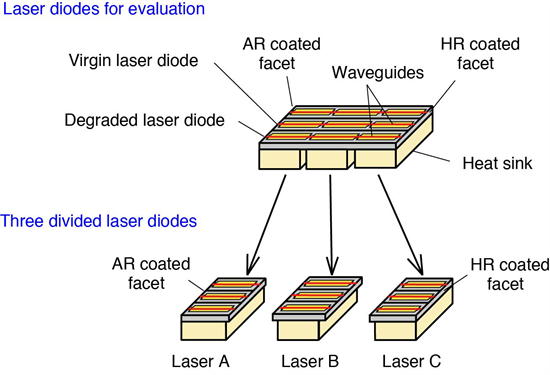
Fig. 1 Laser diodes prepared to evaluate degradation.
Figure 2 shows one of our experimental results. An increase in the threshold current and a decrease in the differential efficiency was prominent in laser A. In contrast, degradation of the lasing characteristics was well suppressed in lasers B and C. Accordingly, we concluded that the degradation of the AR-coated facet was dominant for our laser diodes.
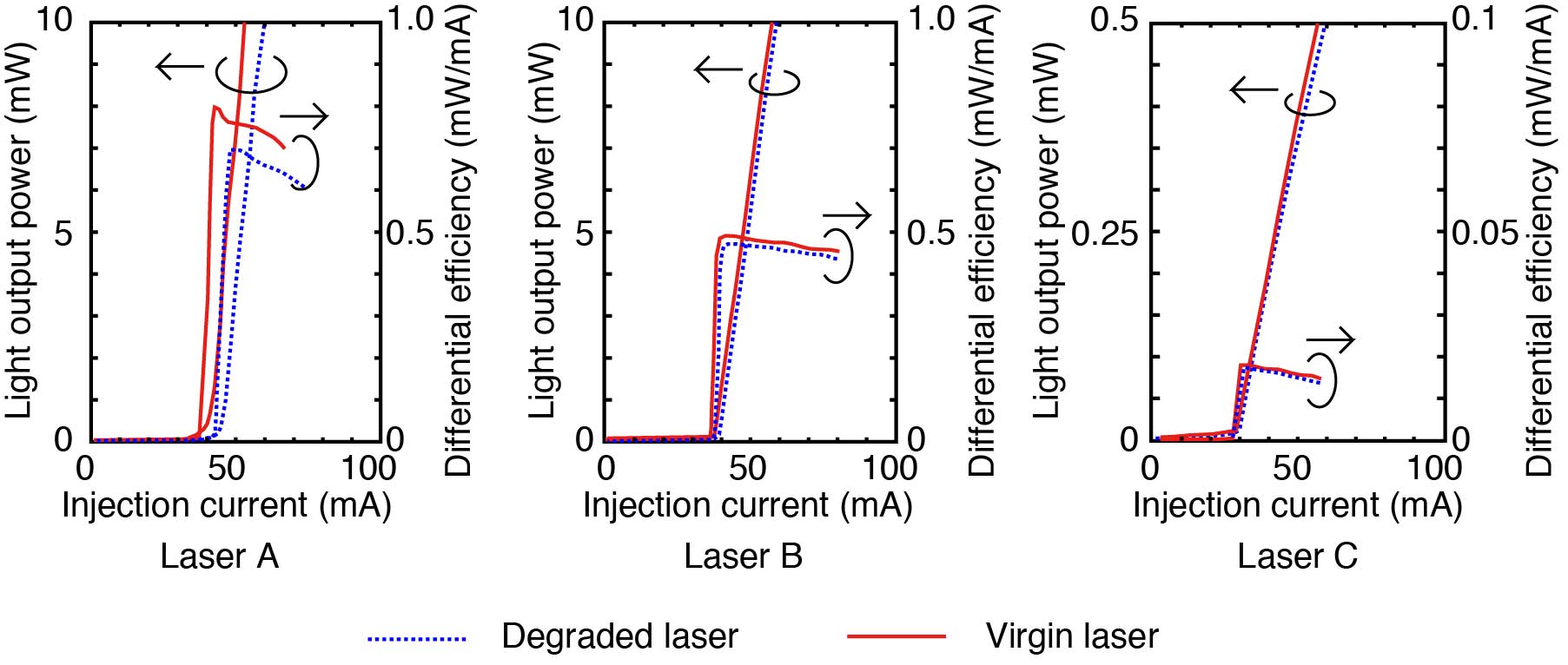
Fig. 2 Light output power vs. injection current characteristics for lasers A, B, and C.
3. Method of lifetime estimation in the case of sudden failure caused by
COD[4]
AlGaInP laser diodes exhibit two kinds of degradation modes under an APC
aging test. One is gradual degradation, in which the injection current
increases gradually, and the other is the sudden failure, which is often
caused by catastrophic optical damage (COD) at the end-facet mirror. The
lifetime in the case of gradual degradation can be estimated from the rate
of increase of the injection current; however, it is difficult to estimate
the lifetime in the case of sudden failure. We proposed an estimation method
for the lifetime in the case of a sudden failure by measuring the dependence
of the COD level on the operation time.
Figure 3 shows the dependence of the COD level on the operation time under
APC conditions for AlGaInP laser diodes with AR-HR facet coatings. The
COD level decreases as the operation time increases and can be expressed
as a logarithmic function of the operation time. Moreover, the rate of
decrease of the COD level significantly depends on the output power of
the laser diodes. Sudden failure occurs when the COD level decreases to
the operation power of the laser diode. Accordingly, one can estimate the
lifetime of a sudden failure by extrapolating the time dependence of the
COD level.
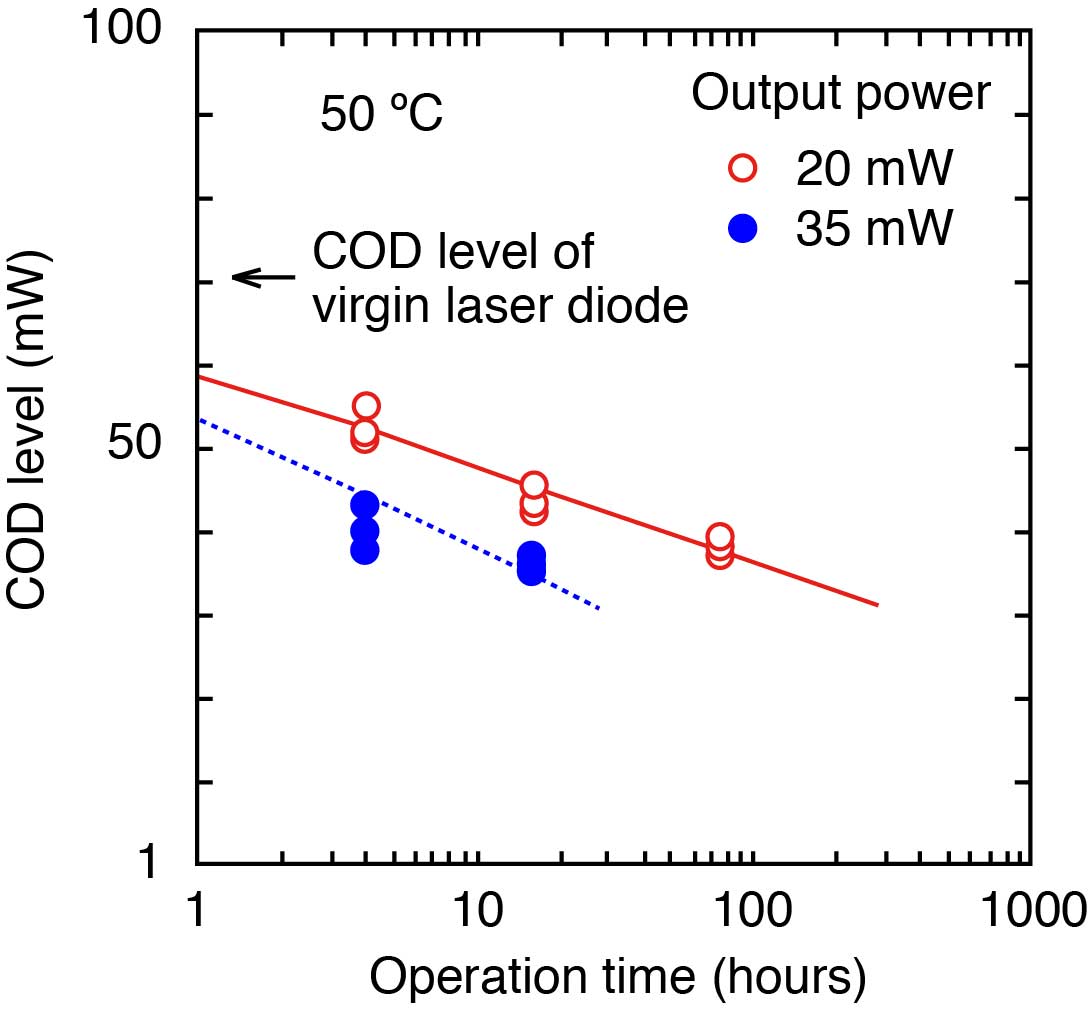
Fig. 3 Dependence of the COD level on the operation time.
Figure 4 shows optical microscope images of the degraded end-facet. Facet erosion was observed at the light-emitting region. We also confirmed mutual diffusion at the interface between the coating material and semiconductor material using micro-Auger sputter profiling.
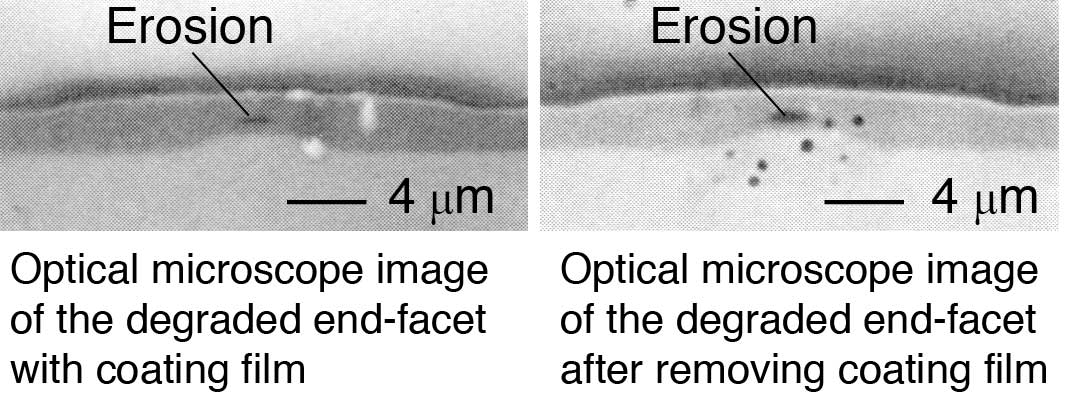
Fig. 4 Optical microscope images of the degraded end-facet.
4. Dependence of facet degradation on the coating film [5]
The gradual degradation of the laser diode depends on the coating film
formed on the end-facet. We evaluated the degradation rate for three types
of AlGaInP laser diodes with different AR coating films (an e-beam-evaporated
SiO2 film with an O2 ion-assisted coating, an e-beam-evaporated Al2O3 film, and an electron cyclotron resonance (ECR)-deposited SiN film) under
APC conditions of 20 mW and 50 oC. Figure 5 shows the normalized rates of increase of the injection currents
for the three types of laser diodes. We found that the laser diodes with
an ECR-deposited SiN film exhibited the lowest rate of increase of the
injection current.
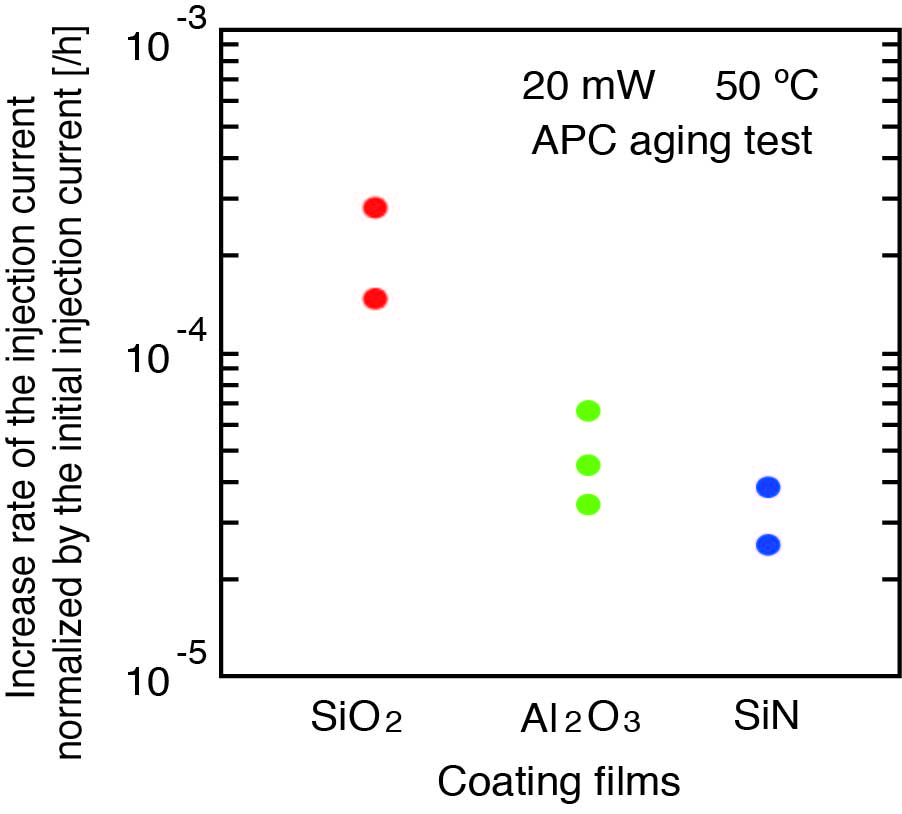
Fig. 5 Dependence of the degradation on the coating film.
By improving the lasing characteristics of the AlGaInP laser diode and
the facet coating film, we achieved stable operation for over 2,000 hours
under APC conditions of 35 mW and 50 oC, which were required for practical use at that time [6].
Acknowledgements
I would like to thank Dr. T. Misugi, Dr. H. Ishikawa, Dr. T. Sakurai,
Dr. S. Yamakoshi, and Mr. T. Tanahashi for giving me the opportunity to
engage in the research and development of AlGaInP visible laser diodes
at Fujitsu Laboratories Ltd. I also want to thank my collaborators, Mr.
A. Furuya, Mr. Y. Kito, Ms. M. Sugano, Mr. H. Sudo, Mr. M. Kondo, Dr. C.
Anayama, and Ms. K. Domen.
References
[1] Denpa-Shinbun (Japanese newspaper), Fujitsu Ltd. Average seek time
23 ms, data transfer rate 4.9 MB/s, 3.5-inch MO disk drives, July 16, 1999.
[2] Fujitsu Ltd. press release, 640 MB magneto-optical disk drives (https://pr.fujitsu.com/jp/news/1999/Jul/15.html)
in Japanese.
[3] T. Fukushima, A. Furuya, Y. Kito, H. Sudo, M. Sugano, and T. Tanahashi,
“Method of evaluating facet and bulk degradation in semiconductor lasers,
” IEICE C-I, vol. J78-C-I, no. 2,pp. 73-79, 1995 (in Japanese).
(Translated paper) T. Fukushima, A. Furuya, Y. Kito, H. Sudo, M. Sugano, and T. Tanahashi,
“Method of evaluating facet and bulk degradation in semiconductor lasers,
” Electronics and Communications in Japan, vol. 78, no. 6, part 2, pp.
65-73, 1995.
[4] T. Fukushima, A. Furuya, Y. Kito, H. Sudo, M. Sugano, and T. Tanahashi,
“Catastrophic optical damage of AlGaInP visible laser diodes under high-power
operation, ” IEICE C-I, vol. J78-C-I, no. 3,pp. 143-149, 1995 (in Japanese).
(Translated paper) T. Fukushima, A. Furuya, Y. Kito, H. Sudo, M. Sugano, and T. Tanahashi,
“Catastrophic optical damage of AlGaInP visible laser diodes under high-power
operation, ” Electronics and Communications in Japan, vol. 78, no. 7, part
2, pp. 11-19, 1995.
[5] T. Fukushima, A. Furuya, Y. Kito, M. Sugano, H. Sudo, and T. Tanahashi,
Facet degradation of AlGaInP visible semiconductor lasers with facet passivation,
Jpn. J. Appl. Phys., vol. 33, Part 2, no. 7B, pp. L1007-L1009, 1994.
[6] T. Fukushima, “Study on reliability of 680 nm AlGaInP visible laser
diodes,” doctoral dissertion, Osaka Prefecture University, 1995. (in Japanese).